


What Are Bone Conduction Implants?
Bone conduction implants are surgically placed hearing devices that send sound vibrations through the skull to the inner ear, bypassing the outer and middle ear.
Unlike traditional hearing aids with an ear mould, these devices leave the ear canal open. This can help patients who cannot comfortably wear conventional hearing aids because of chronic ear infections with persistent discharge, irritation or an absent ear canal.
A bone conduction implant system includes an external processor and an internal implant fixed to bone behind the ear. An external sound processor picks up the sound waves. The system converts these into vibrations that travel through the skull bone to the cochlea, the hearing organ in the inner ear. The cochlea converts these vibrations into nerve signals, which the brain interprets as sound.

Types of Bone Conduction Implants
Bone conduction implants connect either through the skin or magnetically across intact skin.
- Percutaneous implants: The processor clips onto a small titanium abutment that passes through the skin. Vibrations travel directly through this connector and a small titanium implant to bone. The surrounding area needs regular cleaning.
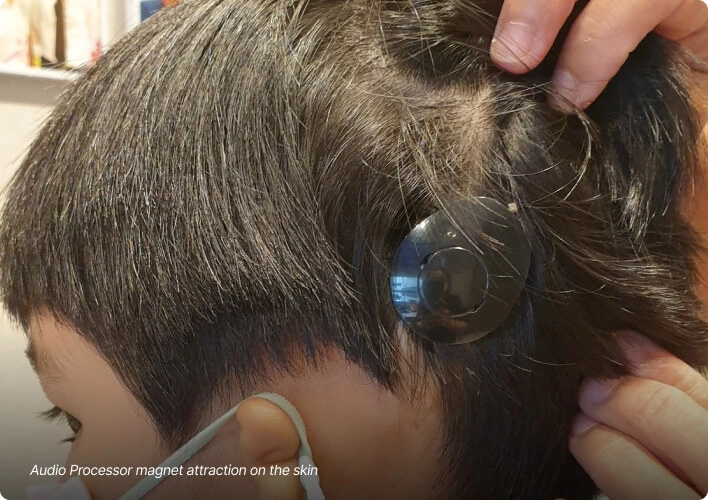
- Passive transcutaneous implants: An internal magnet and a processor magnet hold the processor in place over the implant. The processor generates vibrations, which pass through the skin to the underlying implant and skull.
- Active transcutaneous implants: The processor sends sound signals to an implanted vibrating component beneath the skin. This component drives the bone directly.
Designs and connections differ between systems. A bone-anchored hearing aid, often called a BAHA, uses bone conduction. These bone-anchored hearing systems include abutment-based and magnetic designs; a titanium implant anchors the system to bone. The Bonebridge system and the Osia System are examples of active transcutaneous implants. Osia uses piezoelectric technology to convert electrical signals into mechanical vibrations.
Your surgeon and audiologist will explain which systems are suitable and available in your area. No single design is best for everyone.

Why Are Bone Conduction Implants Used and Who May Benefit?
Bone conduction implants may help patients with certain types of conductive hearing loss, selected mixed hearing loss or single-sided deafness when other hearing options are unsuitable or provide insufficient benefit.
Relevant conditions include microtia, where the outer ear is underdeveloped; aural atresia, where the ear canal is absent or closed; abnormalities of the middle-ear bones; and some mastoid cavities following surgery.
Bone conduction implants may be considered for:
- Conductive hearing loss: Sound cannot pass efficiently through the outer or middle ear, although the inner ear may work well.
- Mixed hearing loss: Both sound transmission and inner-ear hearing are affected. The inner ear must retain enough function for the chosen hearing implant.
- Single-sided deafness: Sound from the deaf side is transmitted through the skull to the better-hearing cochlea.
- Difficulty wearing conventional hearing aids: Chronic ear infections with persistent discharge, ear canal narrowing, skin irritations or any previous ear surgery may make an ear mould unsuitable.
In single-sided deafness, the hearing implant improves access to sounds arriving from the affected side. It sends sound from one ear to the other ear’s functioning cochlea. It does not restore hearing in the deaf ear or recreate normal hearing with two ears.
Bone conduction implants require a sufficiently functioning cochlea and hearing nerve on the side receiving the vibrations. If inner-ear hearing is too poor, a cochlear implant assessment may be more appropriate.
When Is Non-Surgical Treatment Tried First?
Non-surgical options – treatment of ear disease, hearing-aid adjustments and a trial of bone conduction hearing aids – are usually considered before implantation.
A sound processor worn on a softband, headband or adhesive adapter can help the patient experience bone conduction before deciding about an operation. A bone-anchored hearing aid trial helps assess comfort and practical benefit, although it does not exactly reproduce every implanted system.
For single-sided deafness, CROS hearing aids may be another option. These send sound from the affected side to a receiver in the better-hearing ear, without surgery.
An operation becomes an option when the assessment suggests a useful benefit and the advantages outweigh the risks and ongoing care requirements.
Can Children Have Bone Conduction Implants?
Children may benefit from bone conduction hearing, but the timing of the implant placement depends on the system, the child’s skull development, anatomy and local indications.
No universal minimum surgical age of four or six years applies across all systems. Babies and younger children may use a non-surgical device while their hearing, communication development and suitability for an implant are monitored.

When to See an ENT Specialist
See an ENT specialist if hearing difficulties persist despite hearing aids, or if ear discharge, irritation or structural problems prevent you from wearing them.
An assessment is also useful if you regularly miss speech from one side, struggle in group conversations or have ongoing hearing difficulties after an ear operation. Children with an absent ear canal, or concerns about hearing and language development, need a timely assessment.
A sudden drop in hearing requires urgent medical attention. Do not wait for a routine implant consultation.
How to Prepare for Bone Conduction Implant Surgery
Preparation involves confirming your hearing needs, assessing the proposed implant site and reviewing your health and medicines.
An audiologist measures air- and bone-conduction hearing thresholds and speech understanding. Testing each ear helps establish whether sound transmission, inner-ear function, or both are affected. A trial with bone conduction hearing aids can show how amplification will help in everyday situations.
Your ENT specialist will examine your ears and the proposed implant site and review your medical history. A CT scan may be needed to assess bone thickness, anatomy and space for the implant. Tell the team if you are likely to need regular MRI scans, as this can influence the system selection.
Before the operation:
- Provide a list of medicines, supplements, allergies and medical conditions. Do not stop prescribed medicines unless instructed.
- Follow the anaesthetist’s fasting instructions.
- Stop smoking before the operation and during recovery to support wound healing.
- Report any infection or inflammation near the proposed implant site.
- Arrange transport home and support after the anaesthesia.
Ask for an itemised estimate covering the implant, processor, operation, hospital care, fitting and follow-up. Include future processor repairs, replacement and accessories in your planning.
What Happens During Bone Conduction Implant Surgery?
Bone conduction implant surgery places a fixture or vibrating implant in the bone behind the ear through a small external incision.
The operation often takes about an hour, although the system and anatomy may require more time. General anaesthesia is commonly used, particularly for children and active implants. Some abutment-based procedures can be performed under local anaesthesia, with or without sedation.
The main steps are:
- Preparing the site: The surgeon may trim a small area of hair and make an incision behind the ear.
- Securing the implant: The surgeon prepares the bone and fixes the internal implant in position. Some systems require a small recess to accommodate the vibrating component.
- Positioning the connection: An abutment extends through the skin, or the implant remains entirely beneath intact skin.
- Closing the wound: The surgeon closes the incision and applies a dressing. If present, the exposed connector may also have a protective healing cap.
Unlike a cochlear implantation, bone conduction implant surgery does not place an electrode array inside the inner ear, and it usually does not involve reconstructing the eardrum or middle-ear bones.
Many procedures are performed as day surgery. An overnight stay may be advised depending on your health, age, implant type and recovery from anaesthesia.
What to Expect After Surgery and Recovery Timeline
Recovery involves wound healing followed by fitting and programming of the external sound processor.
Mild soreness, swelling or tenderness around the incision is common initially. Take pain relief as directed. You can usually resume food and fluids as tolerated after anaesthesia.
| Stage | What to expect |
| First day or two | A compression bandage may protect the area. Follow the team’s instructions about removal and any healing cap. |
| Around one week | A wound review checks the healing. Non-dissolving stitches may be removed; dissolving stitches do not need to be removed. |
| Around one to two weeks | Many patients can return to school or desk work, depending on their comfort and the surgeon’s advice. |
| Following weeks | The processor is fitted when the wound and implant are ready. Three weeks may be appropriate for some systems; others need longer. |
| Ongoing | Hearing reviews and programming adjustments help optimise comfort and speech understanding. |
Keep the wound dry until your team says it can get wet. Avoid pressure or knocks over the implant. Ask when you can resume strenuous exercise, contact sports and swimming.
As with hearing aids, the audiologist will adjust the sound processor to your hearing thresholds and comfort levels during fitting. You will learn how to attach and clean it, and manage the batteries or charging procedures. Your brain needs time to adjust to the sound signals. Remove it for water activities unless the manufacturer specifically permits it.
Abutment-based systems need regular cleaning around the connector. Magnetic systems also need checks for irritation, particularly if the sound processor causes redness or pressure discomfort.
Expected Results and Limitations
Bone conduction implants can improve access to speech and everyday sounds, but the benefit depends on factors such as your hearing pattern and the listening environment. Sound quality varies and may differ from natural sound.
Some patients with conductive or mixed hearing loss obtain more useful hearing than they could with conventional hearing aids. Speech understanding in background noise may improve, but difficult listening situations can remain challenging.
For single-sided deafness, benefit depends partly on where speech and noise are coming from. The device can help you notice speech on the deaf side, but locating sounds may remain difficult.
The sound processor must be worn and working to help you hear. Regular adjustments, maintenance and hearing reviews remain necessary. An implant also does not stop an underlying condition or age-related hearing loss from progressing.
Risks and Possible Complications
Bone conduction implant surgery carries risks including infection, skin problems, implant loosening and an unsatisfactory hearing result.
Possible complications include:
- Bleeding, swelling, pain, numbness or delayed wound healing.
- Skin inflammation or overgrowth around an abutment.
- Pressure discomfort or skin breakdown beneath a magnetic processor.
- Failure of the implant to become securely integrated with bone.
- Device failure, damage after an impact or the need for revision surgery.
Transcutaneous implants avoid a permanent opening through the skin, but irritation or wound complications can still occur.
MRI access depends on the exact implant model and scanning conditions. Keep your implant identification card and inform the radiology team before any scan. Remove the external processor before entering the MRI scanning area.
Contact your treating team promptly for increasing pain, redness, swelling, discharge, fever or a loose implant. Seek urgent care for uncontrolled bleeding, a severe or unusual headache, new facial weakness, or severe dizziness.
How Barrie Tan ENT Head & Neck Surgery Can Help
Barrie Tan ENT Head & Neck Surgery can assess whether bone conduction implants suit your hearing needs and guide you through your treatment and follow-up care.
Dr Barrie Tan is a senior consultant ENT specialist who previously headed the ENT Department and directed the Centre for Hearing and Ear Implants at Singapore General Hospital.
The assessment will bring together the ear examination, hearing results, device trial, and your communication goals. If implant placement is found appropriate, Dr Tan will explain the surgical approach and risks, perform the procedure, and coordinate wound reviews and audiological follow-up.
If conventional hearing aids are difficult to wear or no longer meet your needs, contact Barrie Tan ENT Head & Neck Surgery for a consultation. An assessment can help you understand whether a bone conduction implant or another hearing option is appropriate for you.
FAQs
What is a bone conduction implant?
A bone conduction implant is a hearing device that sends vibrations through the skull to a functioning cochlea. It bypasses the outer and middle ear and works with an external sound processor.
What are the limitations of bone conduction implants?
The implants depend on sufficient inner-ear and hearing-nerve function and do not restore normal hearing. In single-sided deafness, they route sound to the better-hearing ear rather than restoring hearing in the deaf ear. Understanding speech in noise and locating sounds may remain difficult.
What are the disadvantages of bone conduction implants?
Implanted systems require surgery, ongoing processor care and follow-ups. Abutments will need regular cleaning, while magnetic systems can cause pressure discomfort. Other considerations include cost, MRI compatibility, device maintenance, and possible revision surgery. Non-surgical devices avoid an operation but may cause pressure or skin irritation.
Is a bone conduction implant the same as a cochlear implant?
No. A bone conduction implant mechanically stimulates the cochlea through vibrations through the skull. A cochlear implant bypasses the damaged cochlear hair cells and electrically stimulates the auditory nerve. The appropriate option depends on the type and severity of hearing loss.
Can you get hearing damage from bone conduction implants?
Bone conduction implants do not make excessive sound exposure harmless because vibrations still stimulate the cochlea. An audiologist should fit and program a medical processor. Report uncomfortable loudness or changes in hearing, and continue using appropriate protection around hazardous noise.