

Hearing loss is a common issue affecting millions worldwide, impacting individuals of all ages, from infants to the elderly. This impairment can range from mild to profound and may affect one or both ears. Its onset can be gradual or sudden, triggered by various factors.
Hearing loss manifests in several distinct types, each with unique characteristics and treatment approaches. The specific type of hearing loss is determined by its cause and severity. Among these types, conductive hearing loss is frequently encountered and often responds well to treatment.
What Is Conductive Hearing Loss?
The ear is made up of three parts: the outer, the middle, and the inner ear. Conductive hearing loss occurs when sound waves cannot travel through the outer and middle ear to reach the structures of the inner ear. This blockage or obstruction prevents the proper transmission of sound vibrations. As a result, louder sounds might be muffled and softer sounds may not be heard at all. Although conductive hearing loss is most commonly observed in young children, it can also affect adults.
Causes of Conductive Hearing Loss
Several factors can cause problems with sound wave transmission or conductive hearing loss. These include:
- Ear Infections: Otitis media (Middle-ear infection) can cause fluid buildup behind the eardrum, blocking sound transmission. It is especially common in humid climates like Singapore.
- Earwax Blockages: Earwax is naturally produced to protect the ear canal. However, excessive earwax buildup can prevent sound waves from reaching the eardrum.
- Foreign Objects in the Ear: Small objects can be inserted into the ear and become lodged in the ear canal. They can physically block the sound from passing through, resulting in conductive hearing loss.
- Eardrum Perforation: A hole or tear in the eardrum can disrupt the transmission of sounds, leading to conductive hearing loss. Loud noises, infections, sudden pressure changes, or direct injury can cause this.
- Structural Abnormalities: Structural abnormalities, such as otosclerosis, can cause abnormal bone growth in the middle ear. This growth can hinder sound transmission and lead to conductive hearing loss.
What Are the Signs and Symptoms?
The blockage of sound waves can lead to various signs and symptoms, which may include:
- Difficulty Hearing Soft or Faint Sounds: Sound waves struggle to pass through the outer and middle ear, making it hard or impossible to hear whispers, distant noises, and subtle environmental sounds.
- A Feeling of Fullness or Pressure in the Ear: This sensation is familiar but uncomfortable, often resembling the feeling of water trapped inside the ear.
- Muffled or Distorted Sound Perception: Sounds may seem distorted, dull, or lacking in clarity, even if they are audible.
- Temporary or Fluctuating Hearing Loss: The hearing loss can sometimes be temporary or may come and go.
How Is Conductive Hearing Loss Diagnosed?
Diagnosing conductive hearing loss typically involves a multifaceted assessment, encompassing:
- Clinical History: The doctor will review the patient’s symptoms, medical history, and previous ear infections or injuries.
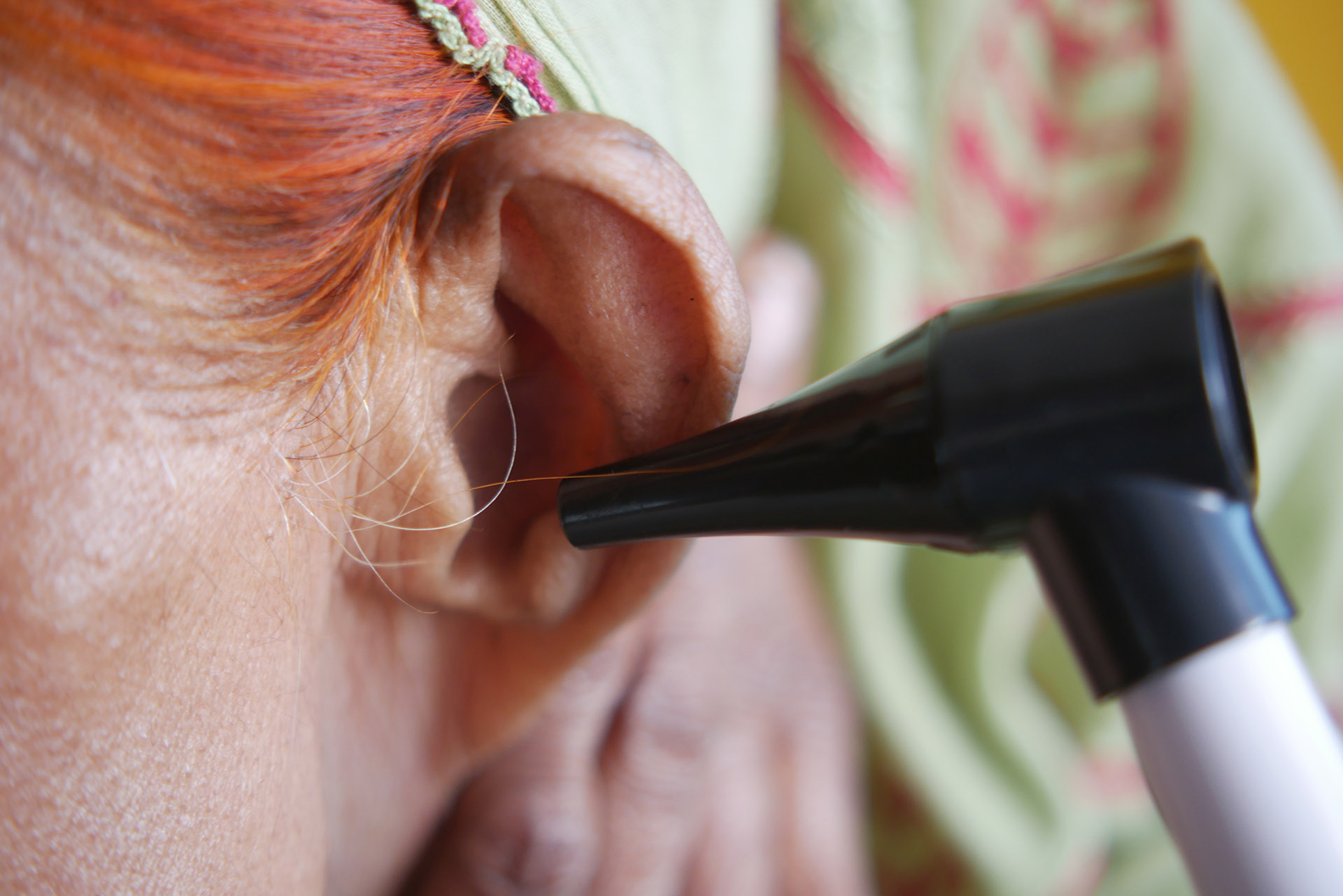
- Physical Examination (Otoscopy): Using an otoscope, the doctor will examine the patient’s ears for earwax buildup, inflammation, fluid in the middle ear, and eardrum perforation.
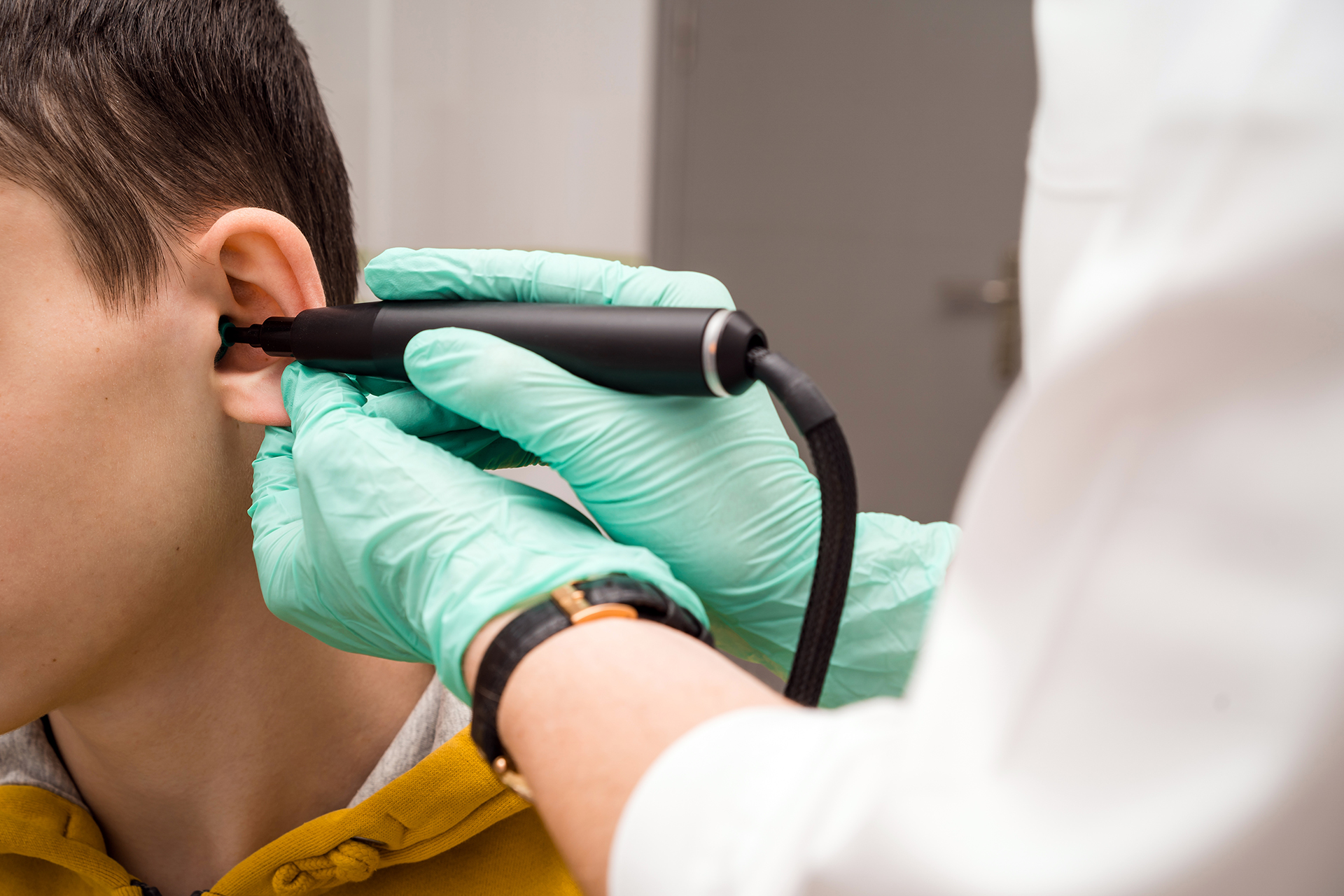
- Hearing Tests: Audiometry and tympanometry may be performed to assess hearing and determine the type and severity of hearing loss.
Prompt professional evaluation is crucial for optimal management of conductive hearing loss. Early diagnosis is essential, as many underlying causes are amenable to medical or surgical intervention.
Treatment Options for Conductive Hearing Loss
Some common treatment options for conductive hearing loss include:
Medical and Non-invasive Treatments
- Removal of Earwax or Foreign Objects: A doctor can safely remove impacted earwax and foreign objects from the ear canal.
- Medications for Infections: Antibiotics are typically prescribed to treat ear infections such as otitis media.
Surgical Options
- Repair of the Eardrum (Tympanoplasty): Severe eardrum perforations may require tympanoplasty, a surgical procedure that repairs the eardrum to restore its ability to vibrate properly and improve hearing.
- Treatment of Structural Abnormalities: Stapedectomy surgically removes the part of the stapes that is affected by otosclerosis to replace it with a prosthesis, restoring the bone’s ability to vibrate and transmit sounds.
Assistive Devices
- Hearing Aids: If medical or surgical interventions fail to correct conductive hearing loss fully, hearing aids can be highly beneficial for managing the condition.
- Assistive Listening Devices: These include alerting devices that provide visual or vibrational cues for sounds like doorbells or phone rings, improving awareness of environmental sounds.

Prevention Tips
Preventing conductive hearing loss may not always be possible, but specific measures can help maintain ear health and minimise risk:
- Maintain Proper Ear Hygiene: Clean ears regularly, but avoid inserting cotton swabs deeply into the ear canal, as this can push earwax deeper or potentially damage the eardrum.
- Avoid Inserting Objects Into the Ear: Inserting objects into the ear canal is risky and should be avoided, as it can lead to eardrum perforation, earwax impaction, or ear infection.
- Protect Your Ears: Use hearing protection (earplugs or earmuffs) during loud activities and keep the volume level low when listening to music through headphones or earbuds.
- Maintain a Healthy Lifestyle: Consuming a healthy diet and exercising regularly can help prevent conditions that can cause hearing problems, such as diabetes or high blood pressure.
- Seek Prompt Treatment: Immediate treatment of ear infections can help prevent hearing damage.
If you are experiencing symptoms of conductive hearing loss, we encourage you to schedule a consultation with our ENT specialist. Early identification and intervention can help prevent potential complications